

Affiliate marketing has quietly become one of the most consequential revenue channels in the digital economy, and in 2026, it is no longer a side conversation. With global industry value surpassing $18.5 billion and U.S. spending projected to exceed $13 billion this year alone, performance-based partnerships now sit at the centre of how brands grow, how creators earn, and how consumers discover products they actually buy.
Yet the channel looks very different from even two years ago. Artificial intelligence is reshaping content creation and campaign optimisation at scale. Social commerce is blurring the line between entertainment and purchase. Privacy regulations are forcing a fundamental rethink of tracking infrastructure. And the rise of AI-powered search tools like ChatGPT and Google’s AI Overviews is changing where consumers get their buying recommendations in the first place.
Whether you’re a marketer building out your first affiliate program, a brand re-evaluating your partnership mix, or a content creator looking to monetise more effectively, this guide gives you the full picture from foundational mechanics to 2026’s most important trends and practical strategies that actually move the needle.
For those starting, resources like LetsUncover are worth bookmarking. It covers digital marketing, affiliate marketing strategies, and online earning opportunities tailored for emerging markets.
What’s Inside This Guide
- What Affiliate Marketing Actually Is (And How It Works)
- The 2026 Affiliate Marketing Landscape: Key Numbers
- The Four Core Players and Their Roles
- Types of Affiliate Marketing Programs
- How Affiliates Get Paid: Commission Models Explained
- The Biggest Trends Reshaping Affiliate Marketing in 2026
- How to Build an Affiliate Program That Actually Performs
- How to Succeed as an Affiliate Marketer in 2026
- Common Mistakes That Kill Affiliate Programs
- The Future of Affiliate Marketing: What Comes Next
1. What Affiliate Marketing Actually Is (And How It Works)
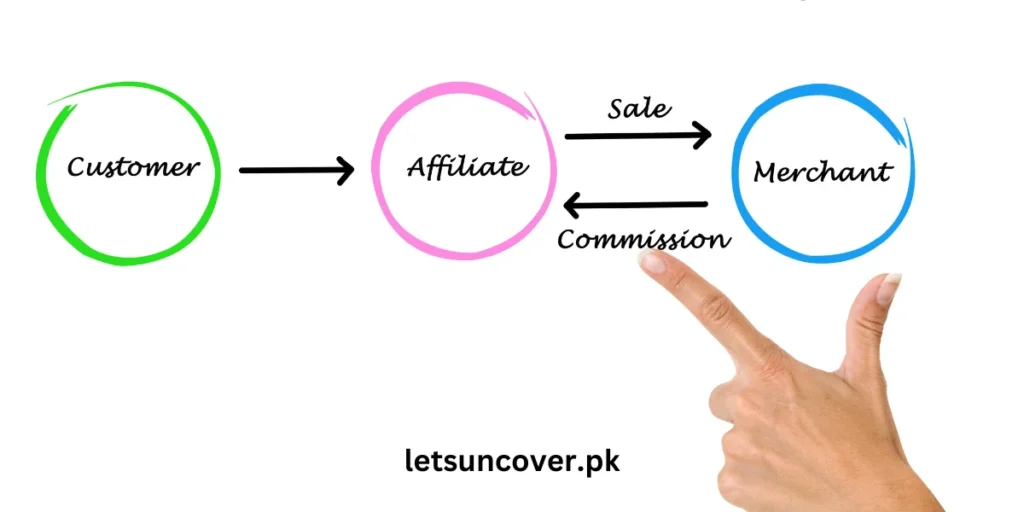
Affiliate marketing is a performance-based arrangement where a business pays external partners called affiliates a commission for driving specific outcomes. Those outcomes are typically a sale, a lead form submission, a free trial signup, or some other predefined conversion event.
The core mechanism is simple: an affiliate promotes a product or service to their audience using a unique tracking link. When someone in that audience clicks the link and completes the desired action, the affiliate earns a commission. The advertiser pays only when results are delivered, making it one of the most cost-efficient acquisition channels available.
Think of it as an outsourced salesforce that only gets paid for results. You’re not paying for impressions, clicks, or reach; you’re paying for customers. This pay-for-performance structure is a large part of why affiliate marketing delivers an average ROI of 12:1 across the industry, among the highest of any digital marketing channel.
A Simple Step-by-Step Example
1. A travel blogger writes a detailed review of travel insurance companies.
2. She includes a unique affiliate link to one of the insurers.
3. A reader clicks the link, compares plans, and purchases a policy.
4. The affiliate tracking system records the conversion.
5. The blogger earns a commission, typically $20–$80 per policy sold.
6. The insurer gains a customer they wouldn’t have found otherwise.
Both sides win. That mutually beneficial dynamic is why the model has scaled so aggressively across virtually every industry.
2. The 2026 Affiliate Marketing Landscape: Key Numbers
Understanding the current scale of affiliate marketing matters before diving into strategy. Here are the most important benchmarks shaping the channel right now.
Market Size & Growth
$18.5 billion: current global affiliate marketing industry value (Cognitive Market Research, 2025)
$20+ billion: projected global market value by the end of 2026
$71.74 billion: projected global market value by 2034, at a 15.2% CAGR
$13 billion: projected U.S. affiliate marketing spend in 2026
10%+ year-over-year industry growth rate sustained since 2015
Advertiser & Publisher Adoption
81% of advertisers actively use affiliate marketing for customer acquisition (Forrester)
84% of publishers participate in affiliate programs to monetise their content (Forrester)
80%+ of global brands currently run an affiliate program
90%+: of ecommerce businesses expected to leverage affiliate marketing by the end of 2026
42% of marketers increased their affiliate budgets in 2026 versus the previous year
Revenue Impact
16% of global ecommerce sales are driven through affiliate channels
12:1 average ROI, making affiliate one of the strongest-performing digital channels
$149.76 average revenue per 1,000 visitors for affiliate websites, Authority Hacker
30% of total online revenue for many e-commerce brands comes from affiliate partnerships
Regional Breakdown
North America holds 40% of global affiliate revenue, with the U.S. as the dominant market
Europe represents 30%+ of global spend; the UK leads regionally
Asia-Pacific fastest-growing region, projected 12% CAGR through 2027; mobile commerce exceeds 80% of online transactions in China and India
3. The Four Core Players in Affiliate Marketing
Affiliate marketing involves four distinct roles. Understanding each one and how they interact is foundational to building or joining a program that works.
1. The Advertiser (Merchant or Brand)
The advertiser is the company that owns the product or service being promoted. They create the affiliate program, set the commission structure, supply creative assets, and pay affiliates for results. Advertisers range from global enterprises running programs across thousands of partners to independent e-commerce stores with a dozen affiliates.
For advertisers, the key advantages are budget efficiency (no spend without results), extended reach (affiliates open audiences the brand couldn’t access alone), and trust transfer (when a respected content creator recommends a product, their credibility flows to the brand).
2. The Affiliate (Publisher or Partner)
Affiliates are the individuals or companies who promote the advertiser’s offerings in exchange for commission. They come in many forms: review bloggers, YouTube creators, price comparison sites, email newsletter operators, coupon platforms, and social media influencers. In 2026, micro-influencers and niche content creators have emerged as particularly high-value affiliate partners because of their concentrated, engaged audiences.
A notable data point: affiliates who choose products based on current market trends generate roughly 47% more revenue than those selecting products based primarily on commission rates or personal experience alone.
3. The Consumer
The consumer is the end purchaser. They interact with the affiliate’s content, reading a product comparison, watching a review video, clicking a discount link, and ultimately completing a transaction. Consumers don’t typically pay more because of the affiliate arrangement; the commission comes from the advertiser’s margin, not a markup on price. Research from Nielsen shows that 88% of consumers have purchased a product after following an influencer recommendation, which underscores how naturally affiliate content fits into the consumer discovery journey.
4. The Affiliate Network or Platform
Affiliate networks serve as intermediaries, providing the tracking infrastructure, payment processing, and marketplace functionality that connect advertisers with publishers at scale. Major networks include platforms like CJ Affiliate, ShareASale, Impact, Awin, and Rakuten. In 2026, standalone Software-as-a-Service affiliate platforms are also increasingly popular for brands that want more control over their programs. The top five affiliate networks collectively drive more than 70% of industry revenue.
4. Types of Affiliate Marketing Programs
Not all affiliate marketing is the same. The category of program you run or join shapes everything from the quality of content produced to the commission economics that make it viable.
Content & Review Sites
Long-form review sites, comparison platforms, and editorial content hubs are the backbone of affiliate marketing. These publishers invest in detailed, SEO-optimised content that ranks in search engines and captures high-intent traffic. A technology review site that ranks for ‘best project management software’ and includes affiliate links to multiple platforms can generate significant recurring commissions from a single evergreen article.
Influencer & Creator Partnerships
Social media creators have become a major force in affiliate marketing, particularly through short-form video on TikTok and Instagram Reels and long-form content on YouTube. Influencer-driven affiliate campaigns are growing at 26% year-over-year. The key distinction from traditional influencer marketing is attribution: affiliates earn based on the conversions they generate, not just on reach or engagement.
In 2026, the most effective influencer affiliate relationships are built as genuine partnerships, brands provide exclusive access, product input, and differentiated commissions, while creators provide authentic, sustained promotion that outperforms purely transactional campaigns.
Email Marketing Affiliates
Email newsletter operators with highly engaged subscriber lists represent some of the most lucrative affiliate partners available. Because these audiences have opted into a relationship with the creator, conversion rates on affiliate recommendations can be multiples higher than organic content. This makes email a particularly valuable affiliate channel in finance, B2B software, health, and other high-ticket categories.
Cashback, Coupon, and Loyalty Platforms
These affiliates monetise transactional intent consumers who are already close to a purchase decision and looking for a discount, cashback, or deal to push them over the line. Research shows that 57% of consumers have purchased through a cashback or rewards affiliate site. While the traffic is often lower in brand consideration value, the conversion rates are among the highest of any affiliate type.
B2B and SaaS Affiliate Programs
Business software companies have become prolific affiliate program operators because of the high customer lifetime value their products generate. A SaaS company paying $200 per customer acquisition through affiliates may be acquiring users worth $2,000+ annually. The recurring commission model, where affiliates earn a percentage of subscription revenue for as long as their referral remains a customer, has also made B2B affiliate marketing an attractive income source for professional content creators and consultants.
5. How Affiliates Get Paid: Commission Models Explained
The commission model is one of the most consequential decisions an affiliate program manager makes. Different models align incentives differently and attract different types of affiliates.
Cost Per Sale (CPS)
The most common model: the affiliate earns a fixed amount or percentage of the sale value when their referral makes a purchase. Commission rates vary widely by industry. Physical goods typically range from 3–10%, while digital products and SaaS can go 20–50% or higher because there are no manufacturing or fulfilment costs.
Cost Per Lead (CPL)
The affiliate earns a commission when their referral completes a lead action, filling out a form, starting a free trial, or requesting a quote. This model is common in financial services, insurance, real estate, and B2B, where the sales cycle is long, and the value of a qualified lead is high. CPL rates in financial services can range from $20 to $200+ per lead, reflecting the customer lifetime value in that sector.
Cost Per Click (CPC)
Less common in performance-focused programs, CPC pays the affiliate for each click generated regardless of conversion. Because it disconnects earnings from outcomes, CPC arrangements are typically only used in programs where brand awareness (rather than direct conversion) is the goal.
Recurring Commissions
A model that has grown significantly with the rise of subscription software. Rather than a one-time payment, the affiliate earns a percentage of the subscription fee for every month their referred customer stays active. This creates genuine alignment between the affiliate and the advertiser; both benefit from retaining the customer and can compound into substantial passive income for successful affiliates over time.
Hybrid Models
Many sophisticated programs now use hybrid structures: a smaller upfront CPA combined with a recurring revenue share. This rewards affiliates for both acquisition and quality (driving customers who actually stay) while managing the advertiser’s upfront cost exposure.
6. The Biggest Trends Reshaping Affiliate Marketing in 2026

The fundamental model of affiliate marketing is stable, but the execution environment is changing rapidly. These are the trends that are actively reshaping how programs are built, how affiliates operate, and where the opportunity is concentrating.
Trend 1: AI Is Transforming Every Layer of the Channel
Artificial intelligence is no longer optional infrastructure in affiliate marketing; it is the competitive baseline. Nearly 80% of affiliate marketers now use AI tools to automate content creation, SEO optimisation, and campaign personalisation. The shift goes beyond efficiency gains. AI-powered platforms can now predict trending products months before competitors identify the opportunity, identify micro-niches before markets saturate, and forecast affiliate partner performance with accuracy that manual analysis cannot match.
For content creators, AI tools reduce the time cost of producing high-quality, well-optimised content, but the differentiation now comes from the human layer on top: genuine expertise, personal voice, and firsthand experience that AI cannot replicate. Marketers using video content enhanced by AI editing and scripting tools report 49% higher conversion rates than those relying on static written content alone.
From a brand perspective, AI is also critical for fraud detection. Click bots and fake traffic have risen 33% since 2022, costing the industry $71 billion in advertising spend. AI-powered fraud detection systems that identify unusual click patterns in real time have become a necessary investment for any program operating at a meaningful scale.
Trend 2: AI Search Is Changing Where Discovery Happens
One of the most structurally significant shifts in 2026 is happening in how consumers find products. Generative AI tools like ChatGPT, Google’s AI Overviews, and Perplexity are now early stops in the research journey for a growing share of consumers, particularly for considered purchases in technology, finance, and travel. This has significant implications for affiliate marketing strategy.
Research from McKinsey indicates that brand-owned content accounts for only 5–10% of AI search sources, while affiliate and user-generated content can make up significantly more.
This means affiliate publishers who produce high-quality, machine-readable, authoritative content are increasingly positioned to appear in AI-generated recommendations, effectively making affiliate content a crucial channel for brand visibility in AI-powered search environments. Brands that invest in quality affiliate partnerships with authoritative publishers are building an indirect presence in the places consumers are increasingly going to make decisions.
For publishers, this creates urgency to produce content that AI systems recognise as trustworthy: original research, expert analysis, transparent disclosures, and specific, experience-based recommendations rather than generic product summaries.
Trend 3: Social Commerce and Livestream Shopping Are Maturing
Social platforms have moved well beyond simple link-in-bio affiliate arrangements. TikTok Shop, Instagram’s native shopping features, and YouTube’s in-stream product tagging have created direct purchase paths inside content feeds, and they are all trackable at the affiliate level. Livestream shopping is growing at 36% annually, combining entertainment, social proof, and immediate purchase opportunity in a format that naturally lends itself to affiliate attribution.
This convergence of social media and e-commerce has made platforms like TikTok and Instagram genuinely significant affiliate channels, not just brand awareness vehicles. The brands and affiliates winning in social commerce are those who treat it as a distinct medium, building content that entertains first and converts naturally, rather than repurposing static ads into a social format.
Trend 4: Niche Authority Beats Broad Reach
The era of generic affiliate sites ranking for broad product categories is effectively over. Google’s algorithm updates have steadily devalued thin, undifferentiated content in favour of pages that demonstrate genuine expertise, authority, and trustworthiness. In 2026, the most successful affiliates are deeply specialized, and that specialisation is their competitive moat.
High-earning affiliates (those generating over $10,000 per month) are 37% more likely than lower earners to select products based on trending market opportunities within their niche, rather than chasing the highest commission rate. They have built genuine authority in a specific space, which means their audience trusts their recommendations, and conversion rates reflect that trust.
For brands recruiting affiliate partners, this means the quality of an affiliate’s audience engagement matters far more than their raw follower count. An affiliate with 5,000 highly engaged followers in a specialised niche often drives more qualified conversions than one with 50,000 broadly dispersed followers.
Trend 5: First-Party Data and Privacy-Resilient Tracking
Third-party cookie deprecation and expanding privacy regulations have forced a fundamental rethink of affiliate tracking infrastructure. In 2026, approximately 70% of affiliate platforms are actively moving away from cookie-based tracking toward first-party data solutions and server-side attribution methods.
This shift creates both a challenge and an opportunity. The challenge: legacy tracking setups are unreliable, and affiliates may not be receiving credit for conversions they genuinely drove. The opportunity: brands that invest in privacy-compliant, first-party tracking infrastructure build more accurate measurement, more trustworthy publisher relationships, and more resilient programs than competitors still dependent on third-party cookies.
Practical steps include implementing server-side tracking, using network-level first-party cookies, and building affiliate relationships that don’t depend entirely on last-click attribution for accurate measurement.
Trend 6: Multi-Touch Attribution Is Replacing Last-Click
The last-click attribution model, where the final affiliate touchpoint before conversion receives 100% of the commission, has long been recognised as a distorted measure of true contribution. In 2026, more sophisticated programs are moving to multi-touch models that distribute credit across the multiple affiliate interactions that contributed to a customer’s decision.
For program managers, this means investing in attribution modelling that can surface the full journey: the blog post that introduced the brand, the YouTube review that built consideration, and the coupon affiliate that triggered the final purchase. Each played a role. Rewarding only the last touch systematically undervalues discovery-oriented affiliates and can distort the partner mix in ways that hurt long-term program health.
7. How to Build an Affiliate Program That Actually Performs
Most affiliate programs underperform not because the economics are wrong, but because they are set up reactively rather than strategically. These are the decisions that separate programs that scale from those that plateau.
Define Your Economics Before You Launch
The commission you offer needs to be high enough to attract quality partners and motivate them to prioritise your program, but structured so that the channel remains profitable at scale. Start with your customer lifetime value and work backwards. If a new customer is worth $500 to your business over 12 months, a $50–$100 CPA leaves a healthy margin while offering real earning potential to affiliates.
Also consider the total cost of the channel: network fees, affiliate management time, creative production, tracking infrastructure, and fraud mitigation. Brands typically invest between $20,000–$50,000 annually in affiliate program management at a meaningful scale.
Recruit With Quality as the Filter
Mass recruitment, opening your program to every publisher who applies, is a path to diluted brand presence and fraud exposure. The brands with the most effective programs in 2026 take a selective, relationship-first approach. They identify the publications and creators their target customers already trust, reach out proactively with a clear value proposition, and build the program from a foundation of partners who genuinely align with the brand.
Direct partnerships with publishers bypassing affiliate networks for a subset of top partners generate 30–40% higher conversion rates on average compared to network-mediated relationships, according to data from program managers at Affiverse. The deeper the relationship, the better the output.
Give Affiliates What They Need to Succeed
The top reason quality affiliates underperform or disengage is inadequate support. Creative assets that don’t match the affiliate’s format, outdated product information, long approval cycles, and opaque reporting all erode the publisher’s ability to promote effectively. Build your program infrastructure around the affiliate experience, not just the advertiser’s convenience.
Specifically, invest in: clear product briefings with unique selling points and target audience details; creative assets in multiple formats, including video; real-time performance dashboards; a dedicated point of contact for top partners; and regular communications about product launches, promotions, and seasonal opportunities.
Measure What Matters Beyond Last-Click Revenue
The most important metrics in a high-performing affiliate program go beyond raw revenue attribution. Track: new customer rate (what percentage of affiliate-driven purchases are from customers new to the brand), customer lifetime value by partner (do different affiliate types drive customers with different long-term value), fraud rate by source, and content quality signals like time on page and return visit rate from affiliate traffic.
Programs that optimise only on last-click CPA tend to over-index on coupon and cashback affiliates who capture credit for purchases that would have happened anyway, while under-investing in the discovery-phase content affiliates who actually influence decisions upstream.
8. How to Succeed as an Affiliate Marketer in 2026

The barrier to entry for affiliate marketing has never been lower. The bar for actually succeeding has never been higher. Here is what the data and the market are telling us about what works now.
Commit to Genuine Niche Expertise
Generic product review sites are fighting an uphill battle against AI-generated content that is faster, cheaper, and often technically identical. The sustainable competitive advantage in 2026 is real expertise: content that reflects firsthand experience, specialist knowledge, and a perspective that a language model cannot simply generate on demand. Choose a niche you know deeply or are genuinely motivated to learn, and build authority over time rather than chasing short-term traffic across multiple categories.
Build Multiple Traffic Channels
Dependency on a single traffic source is the most common cause of affiliate income volatility. Google algorithm updates, social platform policy changes, and audience behaviour shifts are all outside your control. High-earning affiliates in 2026 typically maintain presence across search (SEO and potentially paid), social media, email, and increasingly, in AI-generated search results. Each channel reinforces the others and provides insurance against any single source declining.
Email in particular deserves special attention. An email list is the only distribution channel you own outright. It is not subject to algorithm changes, platform policy shifts, or reach throttling. Building a subscriber base alongside your content platform is one of the highest-return long-term investments an affiliate marketer can make.
Choose Programs for Fit and Longevity, Not Just Commission Rate
Affiliates who earn the most do not systematically chase the highest commission percentages. They promote products their audience genuinely needs, in markets with sustainable demand, from companies with track records of paying reliably and treating partners well. A 30% commission on a product your audience doesn’t care about converts far worse than a 10% commission on something they were already going to buy.
Evaluate programs on: EPC (earnings per click, which combines conversion rate and commission value), payment terms, attribution window length, program reputation among other affiliates, and the advertiser’s product quality, because your reputation is on the line with every recommendation.
Use AI as Infrastructure, Not Identity
AI writing tools, SEO optimisation platforms, and analytics tools are now essential workflow components for competitive affiliate marketers. They reduce the time cost of production and improve the quality of research, structure, and optimisation. But the mistake is outsourcing the thinking to AI. The unique perspective, personal experience, and specialist judgment that make content trustworthy and that AI search systems increasingly reward are human assets that no tool can generate for you.
Use AI to work faster and smarter. Use your expertise and experience to work better. The combination is formidable; the tools alone are not differentiated.
Disclose, Always
Regulatory requirements around affiliate disclosure have tightened significantly across multiple jurisdictions, and consumer expectations have moved with them. Audiences in 2026 are generally aware that affiliate links exist and are not bothered by them, provided the content is genuinely useful and the disclosure is clear. What damages trust and potentially invites regulatory risk is obscured or absent disclosure. Making it simple and upfront is both the ethical and strategic choice.
9. Common Mistakes That Kill Affiliate Programs
Years of industry data point to recurring patterns that prevent programs from reaching their potential. Recognising them is the first step to avoiding them.
- Launching with insufficient commission: The programs that attract quality publishers offer competitive rates. Launching below market rate for your category signals to experienced affiliates that the program isn’t worth their priority traffic.
- Over-relying on coupon and cashback affiliates: These partners serve a purpose, but should represent a supplement to, not the foundation of, an affiliate strategy. Over-indexing here means paying commissions on purchases that would have happened without the affiliate channel.
- Neglecting top partners: The 80/20 rule applies aggressively in affiliate programs; a small number of partners typically drive the majority of results. Failing to give those partners dedicated management, early access to promotions, and competitive terms is a common program management failure.
- Ignoring fraud: Affiliate fraud, including click stuffing, fake leads, and cookie dropping, is a real and growing problem. Brands without active fraud monitoring are paying for results that aren’t real, which distorts program economics and penalises legitimate affiliates unfairly.
- Setting an attribution window that’s too short: Particularly for products with a longer consideration cycle (software, insurance, travel, high-ticket consumer goods), a 7-day attribution window may mean affiliates don’t receive credit for conversions they genuinely influenced. This depresses program quality and discourages top-of-funnel content affiliates.
- Treating the affiliate channel in isolation: Affiliate marketing performs better when integrated with the broader marketing strategy. Sharing data on customer segments, seasonal priorities, and new product launches helps affiliates create timely, relevant content that converts better for everyone.
10. The Future of Affiliate Marketing: What Comes Next
The trajectory of affiliate marketing is clearly upward, but the shape of the channel will continue evolving. Several developments are worth watching closely.
AI-Native Content and the Premium on Human Expertise
As AI tools proliferate, the volume of affiliate content online will increase dramatically, but the average quality of that content, in terms of genuine insight and trustworthiness, may not. This creates a structural premium on human expertise and authentic experience. Affiliates who have built genuine authority in their niche and brands that have cultivated direct relationships with those affiliates will be disproportionate beneficiaries of this dynamic.
Creator Commerce as the Dominant Affiliate Format
The convergence of content creation, social commerce, and affiliate marketing is accelerating. Creators are increasingly functioning as their own media companies, producing content across multiple formats and platforms, building direct audience relationships, and monetising through a combination of brand deals, affiliate commissions, and their own products. The affiliate model fits naturally into this creator economy because it aligns compensation with actual results.
Embedded Commerce and Contextual Purchasing
Shopping will increasingly happen where consumers are already spending time inside content, within social feeds, during live video, and potentially within AI-generated recommendations. Affiliate tracking infrastructure is evolving to attribute these contextual purchases accurately, enabling brands to participate in commerce formats that didn’t exist a few years ago. Programs that build flexible tracking and open API connectivity will be best positioned to operate across these emerging surfaces.
B2B Affiliate Marketing Reaching Mainstream Adoption
Business-to-business affiliate marketing has historically lagged consumer programs, but the structural economics are compelling: high customer lifetime values, long-considered purchase cycles, and audiences who rely heavily on trusted third-party content for buying decisions all favour the affiliate model. In 2026, more B2B technology companies are building sophisticated affiliate programs, and the next five years are likely to see significant growth in this segment.
Final Thoughts
Affiliate marketing in 2026 is both mature and evolving, and that combination is exactly what makes it an interesting channel to build in. The fundamentals are proven: a performance model that aligns incentives, a distribution mechanism that scales without proportional cost increases, and a trust dynamic that the best affiliates have spent years building with their audiences.
What’s new is the technology infrastructure around it, the consumer behaviour shifts reshaping where discovery happens, and the competitive pressure that makes genuine expertise and authentic relationships more valuable than ever. For brands, the opportunity is to build affiliate programs that treat partners as genuine collaborators rather than an outsourced sales function. For affiliates, the opportunity is to build real authority, diversify channels, and use AI as a tool that serves strategy rather than replaces it.
The brands and creators who understand both dimensions, the timeless logic of performance marketing and the very current dynamics of 2026’s digital landscape, are the ones who will continue to win as the channel grows toward its projected $71.74 billion future.
If you’re looking for a practical starting point to navigate this space, Lets Uncover is a useful destination for actionable guides, honest breakdowns, and real-world affiliate marketing insights for today’s digital landscape.