
Did you know that 91% of all web pages receive zero organic traffic from Google (Ahrefs, 2023)? The reason is not always about backlinks or technical SEO. Most of the time, pages fail because they do not create helpful content that genuinely satisfies the user’s search.
If you want to rank in 2026, you need to master how to create helpful content that aligns with search intent, delivers real value, and earns trust from both readers and search engines.
In this guide, you will learn exactly how to identify what your audience needs, structure your content the right way, and publish audience-focused content that rises in search rankings. Whether you are a blogger, freelancer, or small business owner, this step-by-step playbook gives you a proven framework to create valuable content that performs.
Table of Contents
- What Is Helpful Content and Why It Matters in 2026
- How to Understand Search Intent Before You Write
- How to Create Helpful Content: A Step-by-Step Framework
- On-Page SEO Content Optimization for Helpful Content
- How to Measure Whether Your Content Is Truly Helpful
- Common Mistakes That Prevent You from Creating Helpful Content
- Conclusion
- FAQs
What Is Helpful Content and Why It Matters in 2026
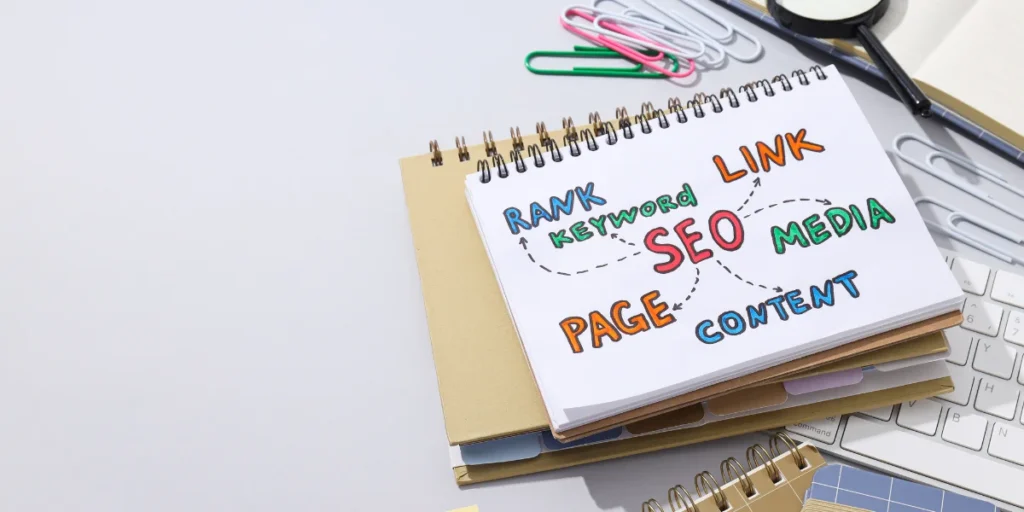
Helpful content is information that is created primarily for people, not search engines. It answers real questions, solves specific problems, and leaves the reader better informed than when they arrived. Google has repeatedly stated that its systems aim to reward content that demonstrates experience, expertise, authoritativeness, and trustworthiness, which is collectively known as E-E-A-T.
The Google Helpful Content Update and What It Changed
Since Google launched its Helpful Content System in 2022 and continued refining it through 2025, websites that create helpful content with genuine user value have seen significant ranking improvements.
Sites that produce content purely to satisfy search engine crawlers, without actually helping readers, have been penalized. According to Google Search Central, the key question is: would a reader feel satisfied after reading your page, or would they leave and search again?
When you create helpful content that truly matches what your audience is looking for, you naturally build topical authority, reduce bounce rates, and increase time on page, all of which are signals Google uses in 2026 to determine content quality and search engine rankings.
Why Helpful Content Is the Core of Modern SEO
In 2026, search engine optimization is no longer about keyword density alone. Google’s AI systems can now detect thin, repetitive, or AI-generated filler content. The platforms that win organic traffic are those that consistently create helpful content that goes deeper, uses original insights, and genuinely satisfies informational search intent. User experience is now a ranking factor, not an afterthought.
How to Understand Search Intent Before You Write
Search intent is the underlying motivation behind a user’s query. Before you create helpful content, you must understand what the searcher is actually trying to accomplish. Matching your content to search intent is the single most important on-page SEO factor in 2026.
The Four Types of Search Intent
Every search query falls into one of four intent categories:
- Informational Intent: The user wants to learn something. Example: how to create helpful content.
- Navigational Intent: The user wants to find a specific website or page.
- Commercial Intent: The user is researching before making a decision.
- Transactional Intent: The user is ready to take an action, buy, or sign up.
This article targets informational search intent, which means users want a complete, educational explanation with actionable steps. Your content format, length, and depth must match that expectation.
How to Identify Search Intent for Any Keyword
To identify the correct search intent for your target keyword, follow these steps:
- Search your keyword in Google and study the top 10 results.
- Identify the dominant content format (guides, lists, videos, tools).
- Look at the People Also Ask section for related sub-questions.
- Check the search intent by examining what the top results promise.
- Use tools such as Ahrefs, Semrush, or Google Search Console to verify search volume and keyword intent labels.
Understanding intent before writing ensures you create helpful content that satisfies the reader from the very first paragraph. If you want to go deeper on this subject, the Keyword Research Strategies for Modern SEO Content on letsuncover.pk covers intent-based keyword research in full detail.
Search Intent vs. Topic: Understanding the Difference
Your topic is what you write about. Your search intent is why someone is searching for it. These are not the same. For example, the topic might be freelancing in Pakistan, but the intent behind the search start freelancing Pakistan is informational. A reader wants a step-by-step guide, not a landing page selling a course. When you create helpful content that closes this gap, your pages rank higher and convert better.
How to Create Helpful Content: A Step-by-Step Framework

Now that you understand search intent, here is a proven, repeatable framework to create helpful content that ranks in 2026. This is the same approach used by top-performing blogs, SEO agencies, and content strategists worldwide.
Step 1: Define Your Audience and Their Exact Pain Points
Before you open a blank document, define who you are writing for and what specific problem they need solved. Ask yourself:
- What does this reader already know?
Identify whether they are a complete beginner, an intermediate learner, or an advanced practitioner. This determines your vocabulary, the depth of your explanations, and how many examples you need to include. A beginner needs step-by-step handholding. An advanced reader needs data, nuance, and shortcuts they have not seen before.
- What do they want to know after reading this article?
Every reader arrives with one core question in mind. Your job is to identify it and then make sure every H2, every H3, and every paragraph either answers that question directly or builds the reader’s understanding toward that answer. When you create helpful content that stays focused on this single goal, you eliminate the filler that kills engagement metrics.
- What action do you want them to take at the end?
Audience-focused content always leads somewhere. Whether your goal is a course enrolment, a newsletter subscription, a social share, or a portfolio download, every piece of content you create should guide the reader toward one clear next step. Define that step before you write the first word, and then engineer every section of the article to move the reader naturally in that direction.
When you create helpful content with a specific reader in mind, every paragraph serves a deliberate purpose. You stop writing to fill space and start writing to solve problems. This audience-focused content approach eliminates filler, reduces your bounce rate, and keeps engagement metrics consistently high, all of which are signals that Google uses in 2026 to decide whether your page deserves to rank.
Step 2: Research Thoroughly Before You Write a Single Word
Publish content that demonstrates real knowledge. Research includes reading the top 10 ranking pages, reviewing Google’s People Also Ask section, studying forums and communities such as Reddit and Facebook Groups, and pulling in data with citations.
According to a 2024 Semrush study, content with at least three credible external citations earns 25% more backlinks on average. For a deeper look at how content research supports SEO writing best practices, visit letsuncover.pk, where expert-led articles on content strategy are published weekly.
Step 3: Structure Your Content Around the Reader’s Journey
Great structure is one of the most overlooked elements when writers try to create helpful content. Your structure should follow the reader’s logical journey from problem to solution:
- Introduction: Hook with a bold stat or question, state the promise, and include the primary keyword within the first 100 words.
- Table of Contents: Always include one for long-form articles. It improves user experience and earns sitelinks in Google.
- H2 Sections: Each H2 covers one major subtopic. Start each H2 section with a 1 to 2 sentence summary before going into H3 subsections.
- H3 Subsections: Break complex points into digestible chunks. Use short paragraphs of 3 to 4 lines maximum.
- Conclusion and CTA: Reinforce the key takeaways and give a clear next step.
Step 4: Write in Plain, Conversational English
The goal is not to impress with vocabulary. The goal is to create helpful content that the reader actually finishes. Use short sentences. Avoid jargon unless you explain it immediately. Aim for a Flesch-Kincaid reading level between Grade 7 and Grade 9. Passive voice should make up less than 15% of your sentences. Write like you are explaining to a smart friend, not presenting at a conference.
Step 5: Add Original Data, Examples, and Visuals
One of the fastest ways to outperform competitor content is to include data and examples they have not used. Cite statistics with the year and source. Add screenshots, custom graphics, comparison tables, and step-by-step examples. These elements signal to both readers and Google that you create helpful content backed by real expertise, which directly supports your E-E-A-T score.
Helpful Content vs. SEO-Only Content: A Comparison
Understanding the difference between truly helpful content and content written purely for search engines is critical. The table below shows how the two approaches differ across key factors.
| Factor | Helpful Content | SEO-Only Content |
| Primary Focus | Reader satisfaction and problem-solving | Keyword density and technical compliance |
| Content Depth | Comprehensive, research-backed, original | Surface-level, repetitive, thin |
| User Experience | High time-on-page, low bounce rate | High bounce rate, low engagement |
| Long-Term Rankings | Compounds over time, builds authority | Short-term gains, high volatility |
| E-E-A-T Signal | Strong: expert authorship, cited data | Weak: no real-world proof or credentials |
| Google 2026 Standing | Rewarded by Helpful Content System | Penalised or ignored |
On-Page SEO Content Optimization for Helpful Content
Creating helpful content is the foundation, but you still need smart on-page SEO to make sure search engines can find, understand, and rank your article. On-page SEO and content helpfulness are not in conflict. They work together. For a complete technical breakdown of these techniques, read the On-Page SEO Content Optimization Techniques article at letsunconer.pk.
Keyword Placement: Where to Use Your Primary Keyword
To create helpful content that also ranks, place your primary keyword in these locations naturally:
SEO Title Tag (within the first 60 characters):
Your title tag is the single most visible on-page signal. Place your primary keyword as close to the beginning of the title as possible. A title like How to Create Helpful Content That Ranks in 2026 leads with the keyword and includes a year-based power word, both of which improve click-through rates from search results.
H1 Heading (ideally at the very start):
The H1 is the main headline Google reads first when crawling your page. It should match your SEO title closely and contain your primary keyword naturally. Do not use a clever or vague H1 that omits the keyword. When you create helpful content, your H1 should also set an accurate expectation for what the article delivers.
First 100 Words of the Introduction:
Google and AI search systems like Google AI Overviews and Perplexity look for early keyword signals to understand what a page is about. Place your primary keyword naturally within the first two or three sentences of your opening paragraph. Pair it with a compelling stat or question to hook the reader immediately and signal topic relevance to the search engine simultaneously.
At Least Two H2 or H3 Subheadings:
Repeating your primary keyword in subheadings reinforces topical depth without stuffing. It also helps readers scanning the article confirm they are in the right place. For a 2,000 word article, two to three keyword-containing H2 or H3 headings is the ideal range. Beyond that, it begins to look unnatural and can dilute the semantic clarity of your content structure.
Meta Description (with a clear call to action):
Your meta description does not directly influence rankings, but it heavily influences click-through rate, which does. Write a 150 to 160 character meta description that includes your primary keyword in the first half and ends with an action-oriented phrase such as Learn the exact steps or Read the full guide. A compelling meta description turns impressions into visits, which tells Google that searchers find your result relevant.
URL Slug (short, lowercase, and hyphenated):
Your URL slug should be short, descriptive, and keyword-rich. Avoid dates, numbers, or stop words in the slug. A URL like /how-to-create-helpful-content is clean, readable, and keyword-optimised. Google has confirmed that keywords in URLs carry a small but real relevance signal. Keep slugs under five words where possible and never change them after publishing without setting a 301 redirect.
Image ALT Text (at least one keyword variation):
Every image on your page should have a descriptive ALT attribute that tells both screen readers and search engines what the image shows. Include your primary keyword or a close variation in the ALT text of your feature image and any infographics or comparison tables you use. For example: step by step guide to create helpful content that matches search intent 2026. This also improves your visibility in Google Image Search.
Conclusion (to reinforce the topic signal and earn featured snippets):
Repeating your primary keyword naturally in the conclusion paragraph strengthens the overall topic signal of the page. It also gives Google a clean, quotable summary of what the article covers, which increases your chances of appearing in featured snippets and AI Overviews. Write your conclusion as a standalone summary that could be extracted and published on its own, because AI systems often do exactly that.
Keep your keyword density between 1.0% and 1.75% across the full article. Never force the keyword where it does not fit naturally. When you create helpful content, natural keyword flow happens automatically because the topic is the keyword. Forced insertion feels jarring to readers and is easily detected by Google’s spam systems in 2026. If a sentence sounds awkward with the keyword in it, use a semantic variation instead and keep the paragraph readable.
Using Semantic Keywords and LSI Terms
Search engine optimization in 2026 relies heavily on topical authority and semantic relevance. Google understands synonyms, related concepts, and topic clusters. When you create helpful content, weave in secondary keywords and LSI terms naturally throughout. For this article, terms such as user-focused content, audience-focused content, content relevance, search intent SEO, and content readability all strengthen the semantic signal without stuffing.
Internal Linking for Topic Cluster Depth
Internal links are one of the most powerful on-page signals you can use. They help Google understand the relationship between your articles and distribute link equity across your site. When you create helpful content within a topic cluster, every cluster article should link to the pillar post and to at least two other cluster articles. This is the exact topic cluster strategy covered in Cluster 2 of this series. In this article, you will find internal links to the pillar post, keyword research cluster, on-page SEO cluster, and others throughout.
Meta Titles and Descriptions That Drive Clicks
Your meta title and description are your ad in Google’s search results. A compelling meta title should be under 60 characters, lead with the primary keyword, and include a power word. Your meta description should be 150 to 160 characters, include the primary keyword, and end with a call to action such as Learn the exact steps or Discover the full guide. These elements directly influence your organic click-through rate, which in turn affects your search engine rankings over time.
How to Measure Whether Your Content Is Truly Helpful

After you create helpful content and publish it, the work is not over. You must measure whether it is actually delivering value to readers. Google’s systems monitor engagement metrics as part of their content quality assessment in 2026.
Key Metrics to Track After Publishing
Monitor these metrics inside Google Analytics 4 and Google Search Console:
- Average Engagement Time: A minimum of 2 minutes on page suggests your audience-focused content is being read, not skipped.
- Bounce Rate: A high bounce rate may indicate a mismatch between your content and the user’s search intent.
- Scroll Depth: Use tools like Hotjar to see how far readers scroll. If most leave before the midpoint, your content structure needs improvement.
- Click-Through Rate in Search Console: If your page has impressions but low clicks, your meta title is not compelling enough.
- Keyword Rankings: Track weekly changes in Google Search Console for your target keyword and secondary terms.
How to Update and Improve Existing Content
The most efficient way to grow your organic traffic in 2026 is not just to publish new articles. It is to update existing ones. Google rewards content freshness. Every 3 to 6 months, revisit your top articles and:
- Add new statistics with updated years and sources.
- Expand sections that have low scroll depth.
- Add new internal links to recently published cluster articles.
- Update the meta description if the click-through rate is below 3%.
- Ensure all facts, links, and examples are current.
If you want to understand how AI tools can help you create helpful content and update it faster, the How to Use AI to Write SEO Blogs 10x Faster cluster article covers the exact workflow used by top content teams in 2026.
Common Mistakes That Prevent You from Creating Helpful Content
Even well-intentioned content creators fall into traps that reduce the helpfulness, relevance, and ranking potential of their articles. Here are the most common mistakes and how to avoid them in 2026.
Mistake 1: Writing for Search Engines Instead of People
This is the number one reason content fails to rank or fails to retain readers. When you prioritise keyword insertion over actual value, the result is content that reads as unnatural, repetitive, and thin. To create helpful content, always start with the question: does this paragraph make the reader’s life better or easier? If not, cut it or rewrite it.
Mistake 2: Ignoring the Reader’s Full Journey
Many writers answer the surface question without addressing the deeper concerns behind it. If someone searches how to create helpful content, they also want to know how to measure it, how to structure it, and how to promote it. Addressing only one layer of the question produces incomplete content that does not satisfy informational search intent fully.
Mistake 3: Skipping the Content Promotion Step
Publishing is not the finish line. If you create helpful content but nobody reads it, it cannot rank. Share every article across social media, email newsletters, WhatsApp communities, and relevant online groups.
Repurpose blog content into short videos, carousels, and reels. For detailed promotion strategies tailored to Pakistani content creators, you can also explore resources from Game of Branding, a trusted digital marketing resource that covers content distribution, brand storytelling, and audience-building in depth.
Mistake 4: Publishing Without a Topic Cluster Strategy
Isolated blog posts are far less powerful than interconnected cluster articles built around a single pillar topic. The Top SEO Content Trends in 2026 highlights how topical authority is now the dominant ranking signal. A single brilliant article competes against entire topic clusters built by authoritative sites. To win, you must create helpful content systematically, not randomly.
Pillar-to-Cluster Linking Strategy for Maximum SEO Impact
To understand this feature, check the pillar post, SEO Content Strategy 2026: How to Create Content That Ranks, published on letsuncover.pk, and learn how pillar-to-cluster linking works, which will help you replicate this structure on your own website.
What Is a Pillar-to-Cluster Linking Structure?
A pillar post is a comprehensive, high-level article that covers a broad topic at a high level. Cluster articles are more focused, deep-dive pieces that each target a specific subtopic within the pillar’s umbrella.
Every cluster links back to the pillar, and the pillar links out to every cluster. This web of internal links tells Google that your site has deep, structured knowledge on a topic, which builds topical authority and improves search engine rankings across the entire group of pages.
Level Up Your Skills with LetsUncover on YouTube
Your growth does not have to stop at this article. The LetsUncover YouTube channel, run by Soban Tariq, is packed with free, practical videos on SEO, freelancing, digital marketing, and content strategy. Whether you are just starting out or scaling an existing online career, the channel provides hands-on guidance you can apply immediately.
If you want to create helpful content and grow your online presence faster, watching the free freelancing course on the LetsUncover YouTube channel is one of the smartest moves you can make right now.
Subscribe today and join thousands of Pakistanis who are building real digital careers through practical, no-fluff education.
Conclusion
If there is one thing to take away from this guide, it is this: the future of SEO belongs to those who genuinely create helpful content that puts the reader first. Search engines in 2026 are sophisticated enough to reward real value and punish empty words.
Here are your three key takeaways:
Match search intent before you write anything.
Understanding informational, navigational, commercial, or transactional intent shapes every decision you make about format, depth, and structure.
Create helpful content with a repeatable system.
Research deeply, structure clearly, write conversationally, and always back your points with data and examples.
Build and link within a topic cluster.
Isolated articles lose to cluster strategies. Use pillar-to-cluster internal linking to build topical authority and compound your organic traffic over time.
For the complete roadmap on how all of this fits together, revisit the SEO Content Strategy 2026 pillar post on letsuncover.pk and explore all its cluster articles in this series. And if you want to accelerate your learning with expert mentorship and free courses, head to letsuncover.pk and subscribe to the LetsUncover YouTube channel today.
FAQs
What does it mean to create helpful content in SEO?
To create helpful content in SEO means to write articles, guides, or pages primarily for people, not search engines. Helpful content answers a specific question, solves a real problem, and leaves the reader fully satisfied without needing to search again. Google’s Helpful Content System in 2026 rewards pages that achieve this goal.
How do I create helpful content that matches informational search intent?
To create helpful content for informational intent, study the top-ranking pages for your keyword, identify the exact question the reader wants answered, and then write a comprehensive, well-structured guide that fully addresses that question with original data, practical steps, and clear examples. Go deeper than every competitor page you analysed.
How many times should I use my focus keyword to create helpful content that ranks?
For a 1,800 to 2,000 word article, use your focus keyword naturally 18 to 35 times, keeping density between 1.0% and 1.75%. When you create helpful content with genuine depth, the keyword appears organically because the entire article is built around that topic. Never force keyword insertion at the expense of readability.
Can I use AI to create helpful content?
Yes, AI tools can help you create helpful content faster by generating outlines, drafting sections, and suggesting related subtopics. However, AI-generated text must be reviewed, personalised, and enriched with original expertise, real examples, and cited data. AI without human oversight rarely produces content that fully satisfies reader intent in 2026.
How long should helpful content be to rank on Google in 2026?
The right length depends on the keyword’s search intent. For informational guides where users want thorough answers, aim for 1,500 to 3,000 words. Pillar posts benefit from 3,000 to 5,000 words. Create helpful content that covers the topic completely rather than hitting an arbitrary word count target.